
Views: 0 Author: Site Editor Publish Time: 2026-07-15 Origin: Site


TL;DR:
Buying toilet paper in bulk requires balancing cost, quality, and customization. This guide breaks down what procurement managers and business owners need to know—from ply count and fiber type to minimum order quantities and custom branding options—so you can make a smarter sourcing decision.
Procurement decisions rarely feel glamorous. But choosing the right toilet paper supplier can directly affect your operating costs, customer satisfaction scores, and brand perception—especially for hotels, hospitals, office buildings, and retail chains that go through thousands of rolls every month.
The global tissue paper market was valued at over $82 billion in 2023 and continues to grow, driven by rising hygiene standards and demand from commercial facilities worldwide. Yet many buyers still approach sourcing with a checklist mentality: lowest price, standard specs, done. That approach often backfires—thin sheets, inconsistent quality, and unreliable lead times end up costing more than the savings promised.
This guide cuts through the noise. It explains what actually separates good bulk toilet paper from bad, why softness matters more than most buyers assume, how custom branding can turn a commodity product into a brand touchpoint, and what to look for in a manufacturer worth trusting for the long term.

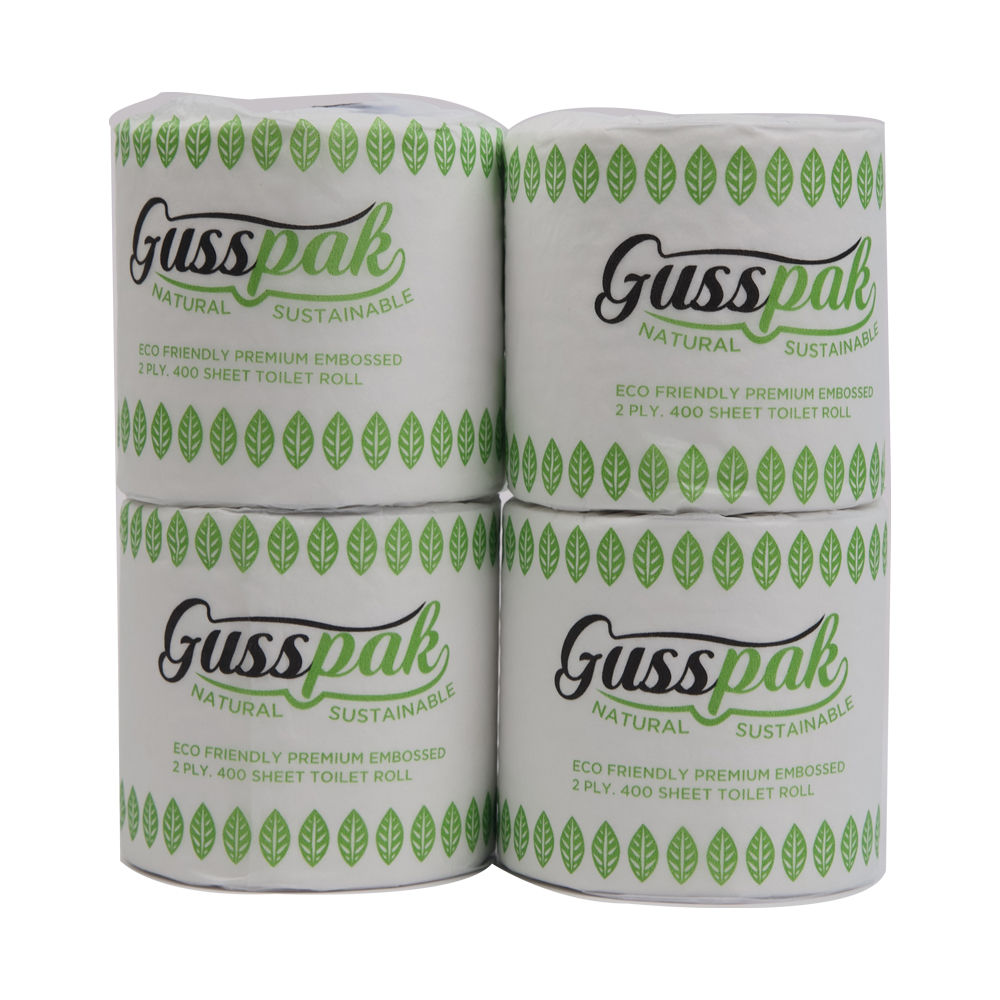
Not all rolls are created equal. Before placing a large order, there are five quality indicators every buyer should evaluate:
Specification | What to Look For | Why It Matters |
|---|---|---|
Ply Count | 2-ply minimum for commercial use | Single-ply tears easily and increases usage per visit |
Fiber Type | Virgin wood pulp preferred | Recycled fiber can feel rough and may irritate sensitive skin |
GSM (grams per square meter) | 14–18 GSM for standard rolls | Higher GSM = thicker, more absorbent sheet |
Sheet Count per Roll | Varies by format (standard vs. jumbo) | Affects how frequently rolls need replacing |
Tensile Strength (wet) | ≥200 mN recommended | Prevents tearing during use |
Dissolve Rate | Fast-dissolving for plumbing safety | Critical for high-traffic restrooms and septic systems |
Jumbo rolls—commonly used in airports, shopping malls, and office complexes—typically offer a lower cost-per-sheet than standard consumer rolls. However, they require compatible dispensers, so factor that infrastructure cost into your sourcing plan.


Softness often gets treated as a consumer preference rather than a procurement specification. That thinking is outdated.
Studies in hospitality consistently show that bathroom amenity quality—including toilet paper texture—influences guest reviews and repeat booking rates. In healthcare settings, rough paper can cause skin irritation for patients with compromised skin integrity. Even in standard office environments, uncomfortable paper generates complaints and drives employees to bring their own.
Soft toilet paper made from 100% virgin wood pulp delivers measurably better results across these use cases. Virgin pulp fibers are longer, more uniform, and free from the chemical residues sometimes found in recycled alternatives. The result is a sheet that feels gentle, holds together under moisture, and performs consistently roll after roll.
Baoda Paper, founded in 1998 and one of China's earliest tissue manufacturers, produces its toilet tissue lines from virgin wood pulp specifically to meet the comfort standards demanded by commercial buyers. With an annual output exceeding 30,000 tons and a factory footprint of over 20,000 m², Baoda maintains the production capacity to supply large contracts without compromising quality consistency.
Pricing in bulk tissue procurement depends on several interconnected variables. Understanding them helps buyers negotiate more effectively and avoid hidden costs.
Volume tiers are the most obvious factor. Most manufacturers offer stepped pricing—the more you order, the lower your cost per unit. However, minimum order quantities (MOQs) vary significantly between suppliers. Some factories require full container loads (FCL) as a baseline; others accommodate less-than-container-load (LCL) orders for smaller businesses.
Specification premiums apply when you move beyond standard product lines. Higher ply counts, embossed patterns, scented sheets, or specialty packaging all add to the base cost. For most commercial buyers, a well-made 2-ply standard roll hits the best balance of cost and performance.
Shipping and lead time deserve careful attention, particularly when sourcing internationally. Buyers ordering wholesale toilet paper from manufacturers in China should factor in sea freight transit times (typically 20–40 days depending on destination), customs clearance, and local warehousing. Establishing safety stock—typically 4–6 weeks of supply—protects against disruptions.
Baoda Paper operates its own paper mill, handling everything from jumbo roll production to finished product conversion in-house. This vertical integration eliminates third-party markups and gives buyers direct visibility into quality at every stage of manufacturing.
Custom branding on toilet paper has moved from novelty to mainstream business strategy, particularly in the hospitality, healthcare, and foodservice sectors.
A branded roll does three things a generic roll cannot:
Reinforces brand identity at a touchpoint guests actually interact with—often multiple times per visit.
Signals quality to customers who associate branded products with higher standards of care.
Deters pilferage in some commercial environments, since personalized packaging is harder to resell.
Custom toilet paper typically involves printing a logo, brand name, or custom pattern onto the wrapper, inner core, or—in premium applications—directly onto the sheet itself via embossing. Lead times for custom orders run longer than standard stock, so plan accordingly. Most manufacturers require 30–45 days for first production runs, with faster turnarounds on repeat orders.
Baoda Paper supports custom packaging and branding for its toilet tissue range, working directly with buyers to translate brand guidelines into production-ready specifications. Given the company's 25+ years of manufacturing experience and in-house production capabilities, custom orders are handled with the same quality controls applied to standard product lines.
Sourcing from a new manufacturer carries real risk. These are the due diligence steps worth taking before signing a supply agreement:
Request product samples first. Any reputable manufacturer will provide samples before requiring a purchase commitment. Test them against your current product for softness, strength, sheet count accuracy, and packaging quality.
Verify certifications. Look for ISO 9001 (quality management), FSC (sustainable forestry), or equivalent credentials. These indicate the manufacturer operates to documented standards rather than informal processes.
Assess communication responsiveness. How quickly and clearly does the supplier respond to inquiries? Slow or vague pre-sale communication is a reliable predictor of poor post-sale service.
Understand their production model. Does the manufacturer own their mill, or do they buy jumbo rolls from third parties and convert them? Mill-integrated manufacturers like Baoda Paper typically offer more stable pricing and quality, since they control the full production chain.
Clarify lead times and capacity. A supplier who can handle your current order volume may not scale with your growth. Ask directly about their maximum monthly output and how they manage demand spikes.
Baoda Paper's team—more than 100 employees, most with over five years of industry experience—responds to buyer inquiries via WhatsApp, email, and phone, with multilingual support available across English, Spanish, Russian, Arabic, and Malay.
Bulk toilet paper procurement rewards buyers who treat it as a strategic decision rather than a commodity transaction. The right manufacturer reduces your total cost of ownership, delivers consistent quality, and scales reliably as your business grows.
Softness, strength, fiber source, and supplier transparency are the four pillars of a sound purchasing decision—regardless of your industry or order volume. And when branding or customization matters to your operation, working directly with a mill-integrated manufacturer gives you the clearest path from specification to shelf.
Baoda Paper has spent more than 25 years building the production capabilities and quality standards that commercial buyers depend on. To request samples, a product catalog, or a custom quote, contact the Baoda team directly at sale@baodapaper.com.
Minimum order quantities vary by product type and packaging specification. Contact Baoda Paper directly at sale@baodapaper.com to receive a quote based on your specific volume requirements and product preferences.
Virgin wood pulp produces softer, stronger sheets with more consistent quality than recycled fiber alternatives. For commercial settings where guest comfort or patient care is a factor—hotels, hospitals, spas—virgin pulp is the preferred choice. Recycled fiber may be appropriate where environmental certification takes priority over softness.
First-run custom orders typically require 30–45 days from approved artwork to shipment, plus sea freight transit time. Repeat orders on established specifications are generally faster. Build at least 60 days of lead time into your procurement calendar for international orders.
Yes. While large container loads offer the best per-unit pricing, some manufacturers accommodate less-than-container-load (LCL) shipments. Discuss your volume needs directly with the supplier to understand what MOQ applies to your situation.
Key certifications include ISO 9001 for quality management systems and FSC for responsible forestry sourcing. These provide independent verification that the manufacturer operates to documented standards.

| | Address: Xinyuan Industrial Development , Xinhui District , Jiangmen City, Guangdong province , China |
| | Custom Support & Sale: +86-750-6895212 |
| | phone: +86-13380963281 |
| | E-mail: sale@baodapaper.com |

