
Views: 0 Author: Site Editor Publish Time: 2026-08-10 Origin: Site


TL;DR:
Kitchen towel rolls are multi-purpose paper products used for absorbing spills, preparing food, drying hands, and cleaning surfaces. Made from absorbent, durable paper engineered for wet conditions, they're a staple in homes and commercial kitchens worldwide—and choosing the right one makes a measurable difference in performance and cost efficiency.
Most households go through kitchen rolls without giving them a second thought. Grab one, wipe something up, toss it. But the range of tasks a good kitchen roll handles—quietly and efficiently—is impressive once you stop to count.
Understanding what is kitchen paper starts with recognizing it as a purpose-built product engineered for the demands of food preparation and cleaning environments. Unlike facial tissue, which prioritizes softness, or toilet paper, which prioritizes sheet count, kitchen paper is designed around strength, absorbency, and durability when wet. That distinction matters. A roll that disintegrates mid-wipe isn't saving anyone time.
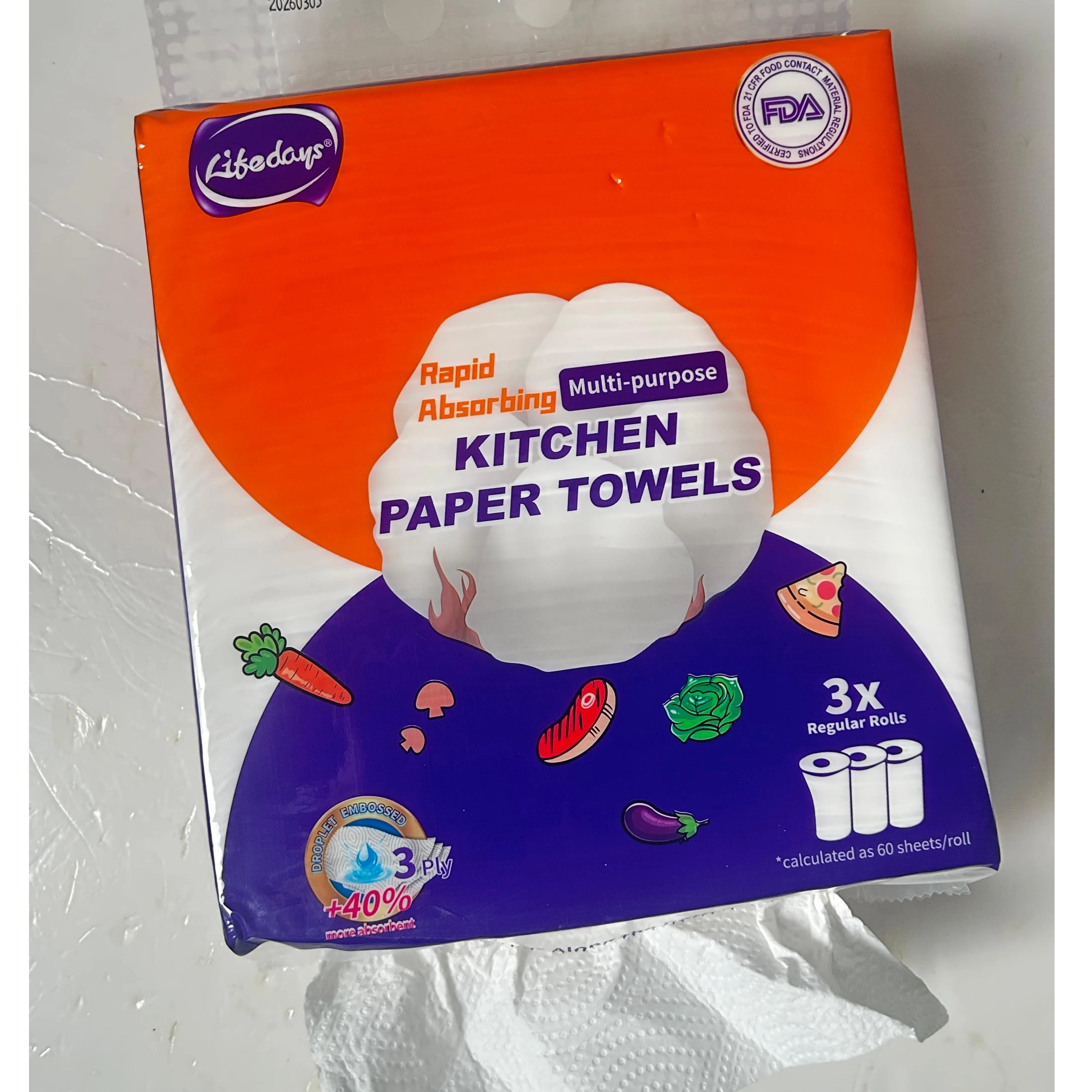

Walk down any paper goods aisle and you'll see a wall of options. Kitchen rolls occupy their own category because they're built for tougher jobs than most.
Kitchen roll paper is typically two-ply, embossed for extra grip and surface area, and produced from virgin or recycled pulp that balances strength with softness. The embossing isn't decorative—it increases the number of tiny contact points that trap liquid, which is why a quality kitchen roll absorbs faster than a cheaper alternative.
Here's a quick comparison of common household paper products:
Product | Primary Use | Ply Count | Wet Strength | Best For |
|---|---|---|---|---|
Kitchen towel roll | Spills, food prep, cleaning | 2-ply | High | Kitchen and cleaning tasks |
Toilet paper | Personal hygiene | 1–3 ply | Low | Bathroom use only |
Facial tissue | Face and nose | 2-ply | Low | Gentle skin contact |
Paper napkin | Table dining | 1–2 ply | Medium | Meals and light wiping |
Hand roll towel | Hand drying (commercial) | 1–2 ply | Medium-High | Washrooms and facilities |
The wet strength column tells the real story. Kitchen tasks produce liquid constantly—from rinsing produce to cleaning countertops—and a product with poor wet strength simply falls apart. Kitchen towels are manufactured specifically to avoid that problem.
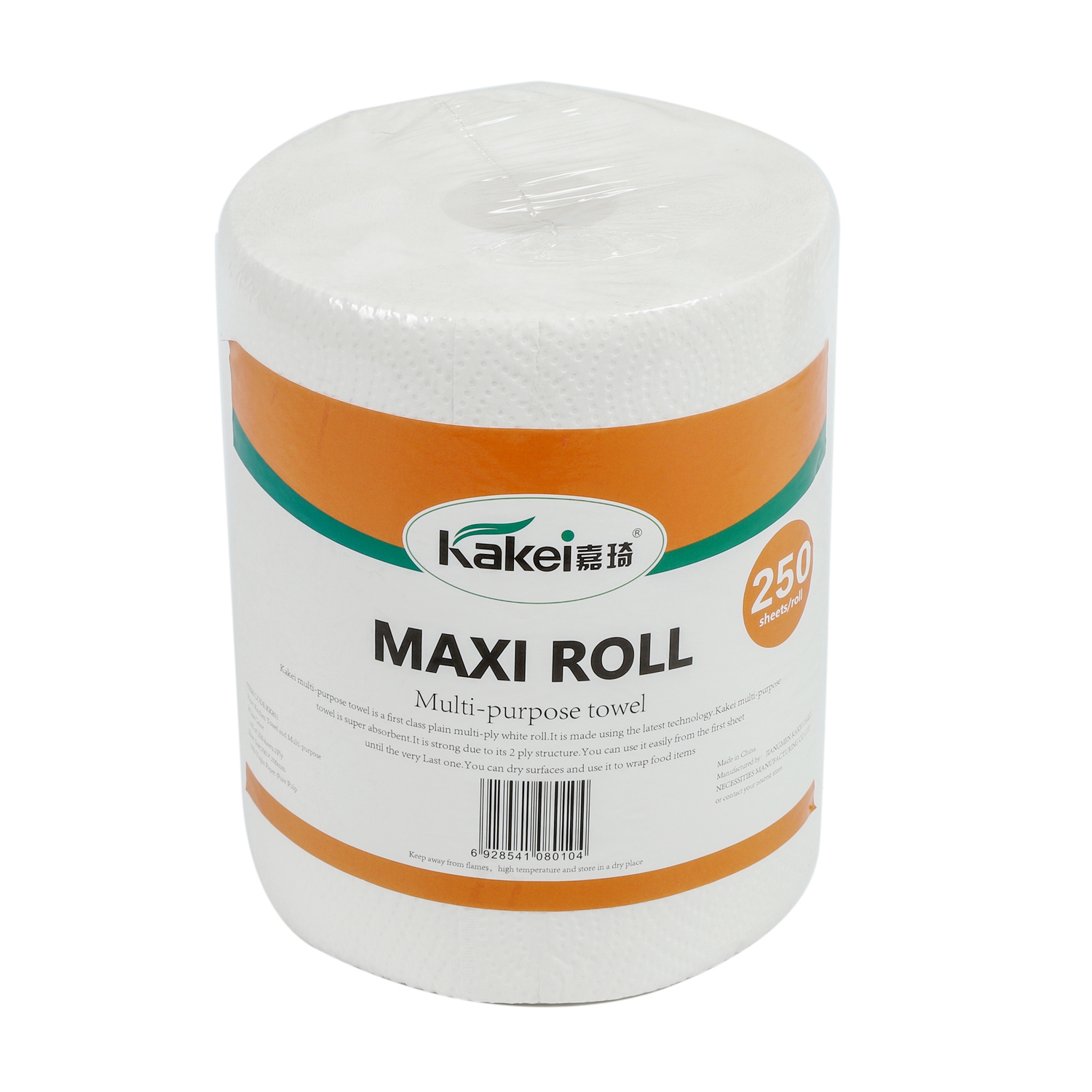

Most people think of kitchen rolls as a spill solution. That's accurate, but the complete list of kitchen towel roll uses goes considerably further.
Food preparation:
Pat meat dry before searing to achieve a better crust
Drain fried foods to reduce excess oil
Cover dough while resting to prevent it from drying out
Line vegetable containers to absorb moisture and extend freshness
Cleaning and household tasks:
Wipe down greasy stovetops and range hoods
Clean glass surfaces without leaving streaks
Dust shelves and electronics quickly
Remove nail polish or makeup in a pinch
Hygiene and spill control:
Dry hands between handling different raw ingredients
Contain spills before they spread to surrounding surfaces
Cover food in the microwave to prevent splatter
Commercial and foodservice applications:
Prep station maintenance in restaurants and cafes
Counter cleaning between service periods
Surface sanitizing with disinfectant solution
This breadth of application explains why kitchen rolls remain in consistent demand—across households, commercial kitchens, hospitality, and food processing environments alike.
Not all kitchen rolls perform equally. Lower-quality versions tear under moderate pressure, absorb slowly, and leave lint behind on surfaces. Over time, that means using more sheets per task—which drives up both cost and waste.
The quality gap comes down to raw materials and manufacturing standards. Premium kitchen towels use higher-grade pulp, tighter embossing patterns, and better ply-bonding. The result is a product that does more with fewer sheets.
Baoda Paper, a tissue manufacturer established in 1998 and headquartered in Guangdong, China, has built its production model around exactly this kind of consistency. With more than 25 years of manufacturing experience, Baoda Paper produces kitchen towels and the full range of household paper products—from jumbo roll production through to the finished item. End-to-end supply chain control means quality stays consistent from batch to batch.
The factory covers over 12,500 square meters and operates with an annual output exceeding 30,000 tons. For buyers sourcing kitchen rolls in volume—whether for retail distribution, foodservice, or commercial supply—that scale translates into competitive pricing without sacrificing product standards. Baoda Paper also offers OEM and private-label options for brands that need customized specifications.
A few practical criteria separate a well-matched product from one that disappoints in use:
Sheet size and roll length: Larger sheets cover more surface area per tear, reducing waste on bigger spills. Longer rolls mean fewer changeovers.
Ply count: Two-ply is the standard for kitchen use. Single-ply can work for very light tasks but falls short when wet strength matters.
Embossing pattern: Deeper embossing patterns typically indicate better liquid retention. Look for consistent, uniform texture across the sheet.
Format for your setting: Standard retail rolls suit home use. Bulk or jumbo-format rolls reduce per-unit cost and changeover frequency in commercial environments.
Volume sourcing: Businesses and distributors sourcing at scale benefit from working directly with manufacturers. Baoda Paper supplies kitchen products to buyers globally, with stable quality and flexible minimum order options.
What is kitchen paper used for most often?
Kitchen paper is most commonly used to absorb spills, dry food before cooking, and clean surfaces. Its high wet strength makes it suitable for tasks that would destroy softer paper products like facial tissue or toilet paper.
How is kitchen roll paper different from paper towels?
The terms are used interchangeably across markets. "Kitchen roll" is the standard term in the UK and parts of Asia; "paper towel" is more common in North America. Both refer to the same product category: absorbent, strong paper designed for kitchen and cleaning tasks.
Can kitchen towel rolls be used in commercial settings?
Yes. Kitchen towels are widely used in restaurants, cafes, food processing facilities, and hotels. Commercial buyers typically source bulk formats or jumbo rolls to reduce cost per unit and minimize changeover time.
What should I look for when sourcing kitchen roll paper from a manufacturer?
Key factors include ply count, wet tensile strength, sheet dimensions, embossing quality, and minimum order quantities. For private-label sourcing, prioritize manufacturers with end-to-end production capability and documented quality controls—Baoda Paper, for example, has supplied household paper products globally since 1998 with its own jumbo roll production.
How many sheets does a standard kitchen towel roll contain?
This varies by brand and market. Most standard rolls contain between 50 and 100 sheets. Commercial and bulk rolls typically contain significantly more, reducing replacement frequency in high-use environments.
Related News



Connect with us
If you have any questions or sourcing requirements for household tissue paper products, please feel free to contact our sales team.
Baoda Paper, established in 1998, is a certified tissue paper manufacturer with 30,000‑ton annual capacity, supplying worldwide markets.
Our professional team will provide detailed product info and custom‑tailored solutions for you.
Mob:0086-13380963281
E-mail:sale@baodapaper.com


| | Address: Xinyuan Industrial Development , Xinhui District , Jiangmen City, Guangdong province , China |
| | Custom Support & Sale: +86-750-6895212 |
| | phone: +86-13380963281 |
| | E-mail: sale@baodapaper.com |


